Introduction
One of the biggest mistakes in cold email outreach is giving up too early.
Most businesses send one email, get no reply, and assume the prospect is not interested.
But in reality, that’s rarely true.
Decision-makers are busy.
Emails get missed, ignored temporarily, or buried under dozens of other messages.
That’s why follow-ups are one of the most important parts of any outbound strategy.
In fact, a large percentage of positive replies come after the second or third follow-up — not the first email.
The problem is that most follow-ups are either:
• too aggressive
• too repetitive
• or completely irrelevant
A good cold email follow-up strategy keeps the conversation alive without sounding pushy.
In this guide, you’ll learn:
• why follow-ups matter
• how many follow-ups you should send
• how to structure a follow-up sequence
• common mistakes to avoid
• how to improve response rates consistently
Why Cold Email Follow-Ups Matter
Most prospects don’t reply immediately.
Not because your offer is bad — but because timing matters.
Your prospect may be:
• busy with internal priorities
• traveling
• overwhelmed with emails
• interested but distracted
Follow-ups increase visibility and improve the chances of starting a conversation.
Without follow-ups, you lose a significant number of opportunities.
The Biggest Misunderstanding About Follow-Ups
Many people believe follow-ups annoy prospects.
Bad follow-ups do.
Good follow-ups don’t.
There’s a difference between:
• repeatedly pushing for a meeting
and
• continuing a relevant business conversation
The goal is not to pressure people.
The goal is to stay visible and provide value.
How Many Follow-Ups Should You Send
There’s no perfect number for every campaign.
But most successful outbound systems include:
• 3–5 follow-ups
Anything less usually leaves opportunities on the table.
However, quality matters more than quantity.
Each follow-up should feel intentional — not automated spam.
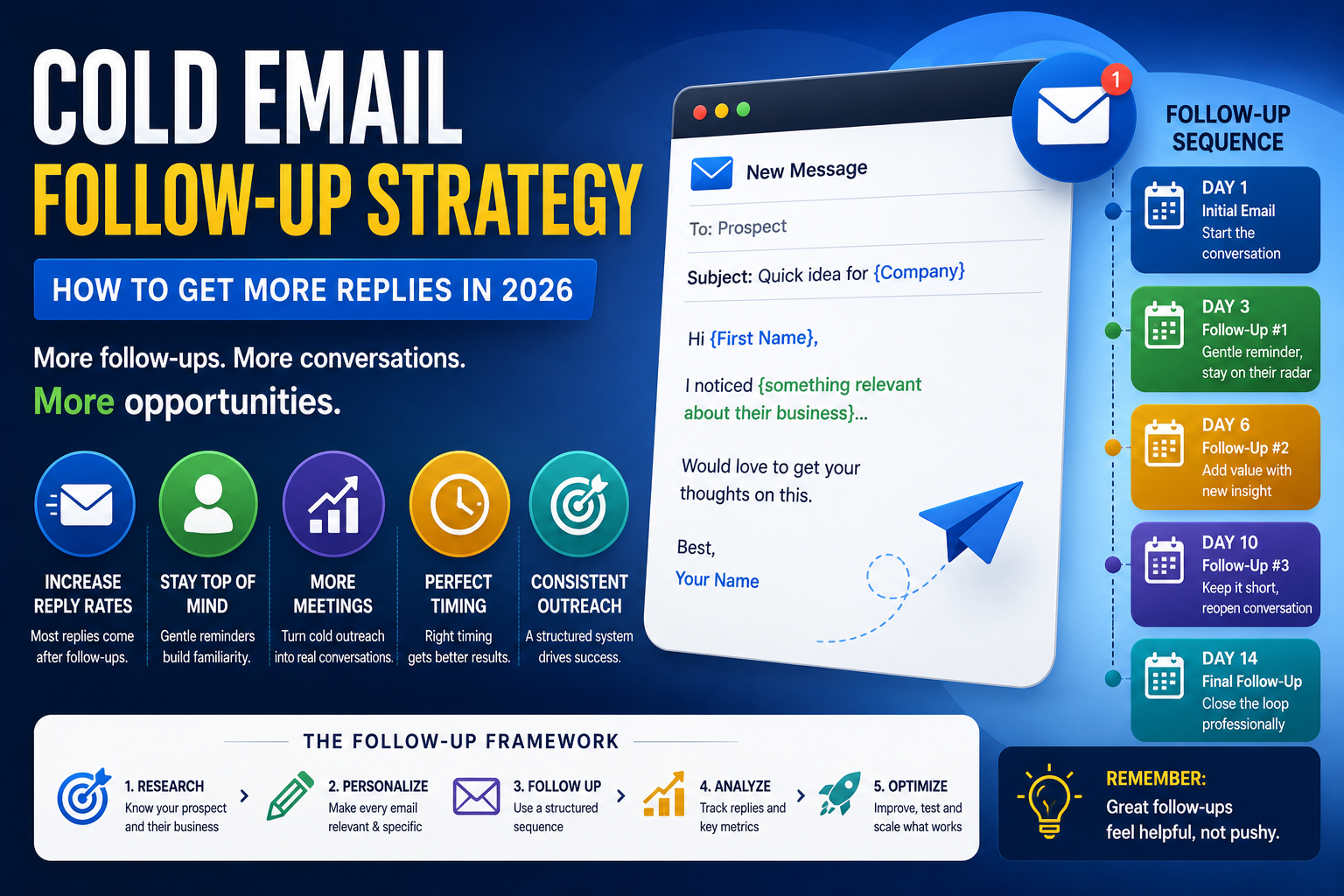
The Ideal Cold Email Follow-Up Sequence
A simple structure works best.
Day 1 — Initial Email
Your first email should:
• introduce relevance
• identify a pain point
• open conversation naturally
Avoid long sales pitches.
Day 3 — Follow-Up #1
Your first follow-up should be short and polite.
The purpose is simple:
Bring the original message back to their attention.
This follow-up should feel like a gentle reminder — not pressure.
Day 6 — Follow-Up #2
Now you can add additional context or insight.
For example:
• industry trend
• common challenge
• short result or observation
This keeps the conversation fresh instead of repetitive.
Day 10 — Follow-Up #3
This is often where replies increase.
At this stage, your prospect has seen your name multiple times, which builds familiarity.
Keep the message concise and conversational.
Final Follow-Up
Your final follow-up should close the loop professionally.
This works surprisingly well because it removes pressure.
Many prospects respond at this stage simply because the message feels respectful and low-friction.
What Makes a Good Follow-Up Email
Effective follow-ups are:
• short
• relevant
• conversational
• easy to reply to
They should not feel like copy-paste reminders.
The best follow-ups often introduce:
• new context
• additional relevance
• a different angle
This makes the sequence feel natural.
How to Keep Follow-Ups From Feeling Repetitive
One of the biggest problems with outbound campaigns is repetition.
If every follow-up says:
“Just following up…”
Your outreach quickly becomes forgettable.
Instead, vary your messaging approach.
Add Industry Insights
Mention trends or challenges relevant to their business.
Example:
• outbound scaling challenges
• hiring growth
• lead generation consistency
Mention Relevant Observations
Use contextual details when possible.
This could include:
• recent company updates
• expansion announcements
• LinkedIn activity
This keeps the conversation personalized.
Reframe the Problem
Sometimes changing the angle improves responses.
Instead of focusing on your service, focus on:
• operational inefficiencies
• missed opportunities
• growth bottlenecks
Common Cold Email Follow-Up Mistakes
Even good campaigns fail because of poor follow-up execution.
Following Up Too Aggressively
Sending daily emails creates frustration.
Give prospects space between messages.
Writing Long Follow-Ups
Shorter emails perform better.
Most follow-ups should be quick to scan.
Repeating the Same Message
Every follow-up should add something new.
Even a small variation improves engagement.
Stopping Too Early
Many conversations happen after multiple touchpoints.
Consistency matters.
Timing Best Practices for Follow-Ups
Spacing matters more than most people realize.
Sending follow-ups too quickly can feel pushy.
Waiting too long reduces momentum.
A balanced sequence typically works best.
Example timing:
• Day 1
• Day 3
• Day 6
• Day 10
• Day 14
This keeps outreach visible without overwhelming the prospect.
Why Deliverability Still Matters
Even the best follow-up sequence fails if emails never reach the inbox.
Deliverability depends on:
• domain reputation
• inbox warmup
• email quality
• verified contact data
Before launching campaigns, always verify your email lists.
You can use
Email Verifier by Maan Digital Solutions
to reduce bounce rates and improve deliverability.
Cold Email Follow-Up Workflow
A scalable workflow makes follow-ups easier to manage.
Step 1: Build Quality Prospect Lists
Focus on relevance before volume.
Step 2: Create Initial Outreach
Keep messaging concise and problem-focused.
Step 3: Build Structured Follow-Ups
Plan follow-ups in advance instead of improvising later.
Step 4: Track Campaign Performance
Measure:
• reply rates
• positive responses
• meetings booked
Step 5: Optimize Continuously
Small improvements compound over time.
Internal Linking Strategy
This blog should connect with:
• Cold Email Outreach Guide
• Cold Email Personalization Guide
• Outbound Lead Generation Guide
This strengthens your SEO structure and topical authority.
Want to improve your cold email reply rates?
Download our Cold Email Follow-Up Playbook and build better outbound sequences.
Conclusion
Cold email follow-ups are not about chasing prospects.
They’re about creating multiple opportunities for conversation.
Most people don’t respond to the first email.
That’s normal.
The businesses that consistently generate meetings are usually the ones that follow up strategically and consistently.
When you combine:
• strong targeting
• personalized messaging
• proper timing
• thoughtful follow-ups
Cold email becomes a much more predictable lead generation channel.
If you want to improve your outbound campaigns:
Book a Free Strategy Call with Maan Digital Solutions.
We’ll help you:
• improve reply rates
• optimize follow-up systems
• generate more qualified sales meetings