Introduction
Cold email outreach is one of the most powerful ways to generate B2B leads — yet most businesses struggle to get results from it.
If you’ve ever sent emails and received little to no replies, you’re not alone.
The problem isn’t cold email itself.
The problem is how it’s done.
Most companies rely on generic messaging, poor targeting, or inconsistent follow-ups. As a result, their emails get ignored, deleted, or marked as spam.
But when done correctly, cold email becomes a predictable system for generating sales conversations.
In this guide, you’ll learn how to approach cold email strategically — from targeting the right prospects to writing messages that feel relevant and worth replying to.
What is Cold Email Outreach
Cold email outreach is the process of reaching out to potential clients who have had no prior interaction with your business.
Unlike mass spam, effective cold email is:
• Relevant to the recipient
• Personalized based on context
• Focused on starting a conversation
The goal is not to sell immediately.
The goal is to open the door for a meaningful business conversation.
Why Cold Email Outreach Still Works
Despite the rise of social media and paid advertising, email remains one of the most effective communication channels in B2B.
Decision-makers check their inbox daily.
More importantly, email gives you direct access — without needing algorithms or ad budgets.
This is what makes cold email powerful:
• You control how many people you reach
• You control how often you follow up
• You control how your pipeline grows
For businesses that want predictable lead generation, this level of control is critical.
The Foundation of Successful Cold Email Outreach
Before writing a single email, you need to get one thing right:
Your Targeting
Most cold email campaigns fail because they try to reach everyone.
Instead, focus on a clearly defined audience.
Ask yourself:
• What type of companies do we serve best?
• Who is the decision-maker?
• What problem are they trying to solve?
When your targeting is clear, your messaging becomes naturally stronger.
How to Write Cold Emails That Get Replies
High-performing cold emails follow a simple structure.
Not complicated. Not clever. Just clear and relevant.
Start With Context
Your opening line should show that the email is written specifically for the recipient.
This could be based on:
• Their company growth
• Hiring activity
• Recent updates
• Industry trends
This immediately separates your email from generic outreach.
Highlight a Real Problem
Once you have their attention, connect with a problem they are likely facing.
The key here is relevance.
Instead of talking about your service, focus on:
• Challenges they may be dealing with
• Gaps in their current process
• Missed opportunities
When the problem resonates, the reader naturally continues.
Present a Clear Value
Now briefly explain how you help.
Keep it simple.
Avoid long explanations or technical jargon.
Your goal is to create curiosity — not to close the deal in the first email.
End With a Low-Pressure CTA
The best cold emails don’t push.
They invite.
A simple, low-friction question works best.
For example:
• Asking if they’re open to exploring
• Checking if it’s relevant
• Suggesting a quick conversation
This increases the chances of getting a response.
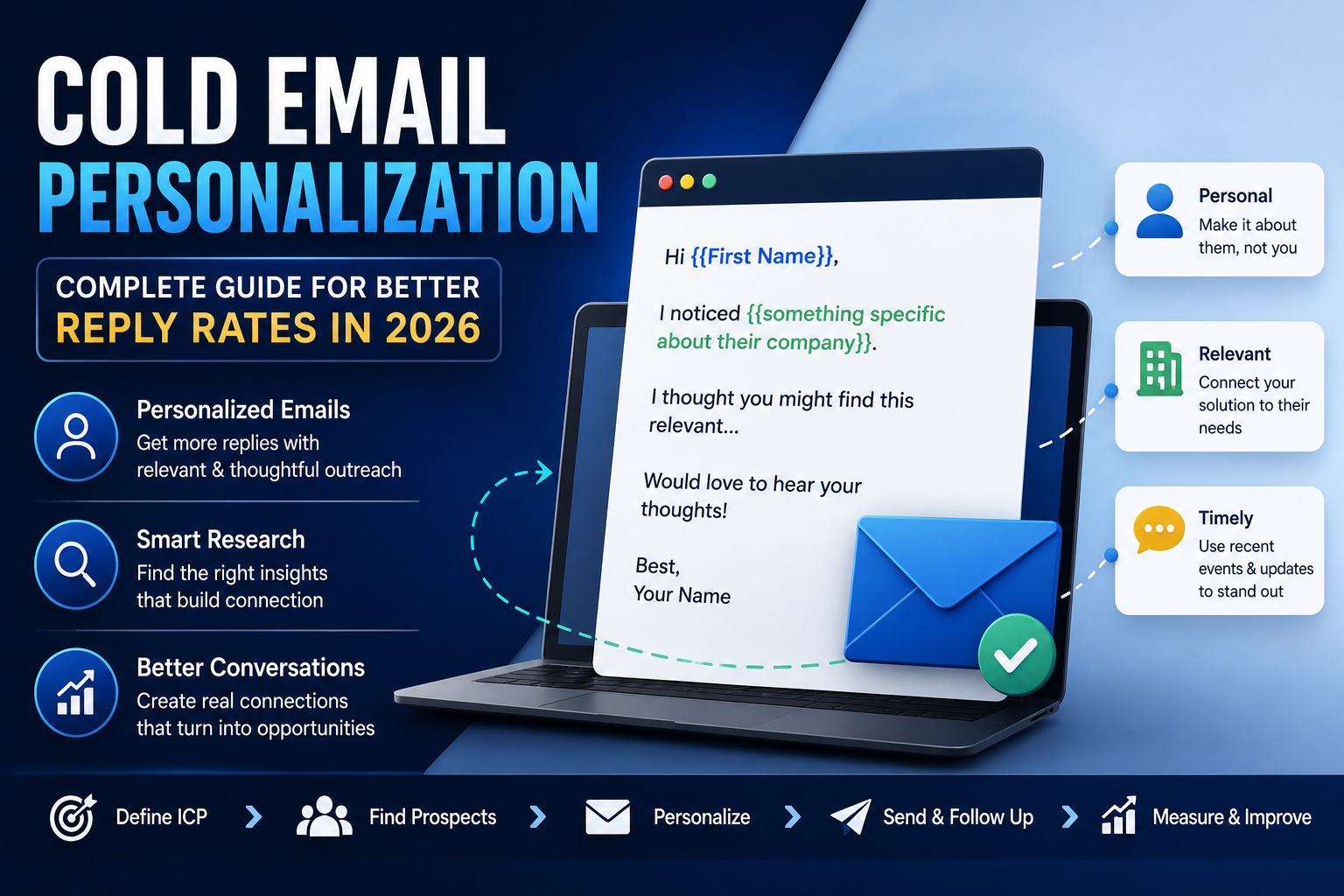
The Role of Personalization in Cold Email
Personalization is no longer optional.
It’s expected.
But there’s a difference between basic personalization and meaningful personalization.
Basic Personalization
This includes:
• First name
• Company name
This is standard — and not enough on its own.
Contextual Personalization
This is where results improve.
It involves:
• Referencing recent activity
• Mentioning company changes
• Identifying growth signals
This shows effort and relevance.
Insight-Based Personalization
This is the highest level.
It includes:
• Identifying potential problems
• Sharing relevant observations
• Connecting insights to your solution
This type of personalization makes your email feel thoughtful — not automated.
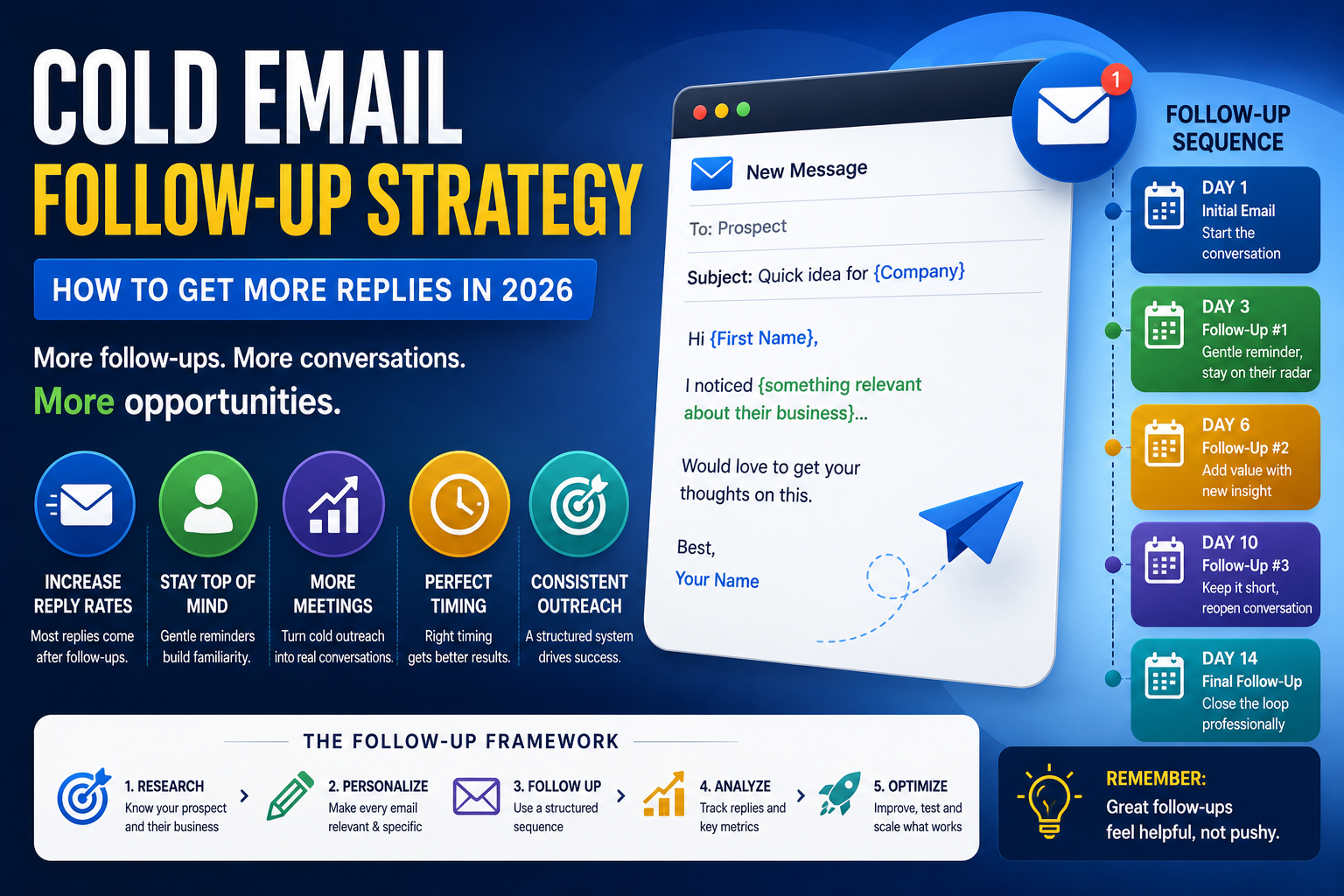
Why Follow-Ups Matter More Than You Think
One of the biggest mistakes in cold email outreach is stopping too early.
Most people send one email and expect a reply.
That rarely happens.
In reality:
Most conversations start after multiple follow-ups.
Follow-ups work because:
• Emails get missed
• People get busy
• Timing improves
A structured follow-up system ensures you don’t lose opportunities.
How to Approach Follow-Ups Effectively
Good follow-ups are:
• Short
• Polite
• Relevant
They should not feel pushy or repetitive.
Each follow-up can:
• Gently remind
• Add new context
• Reframe the message
Spacing is also important.
A typical sequence spreads emails across 8–12 days, giving enough time without overwhelming the recipient.
Common Cold Email Mistakes to Avoid
Even small mistakes can reduce your results significantly.
Sending Long Emails
If your email looks like a blog post, it won’t get read.
Keep it concise and easy to scan.
Talking Too Much About Yourself
Your prospect cares about their problem — not your company story.
Focus on them.
Weak or Confusing CTA
If the next step is unclear, people won’t take action.
Always guide the conversation forward.
Ignoring Targeting
Even the best email won’t work if sent to the wrong audience.
Targeting and messaging go hand in hand.
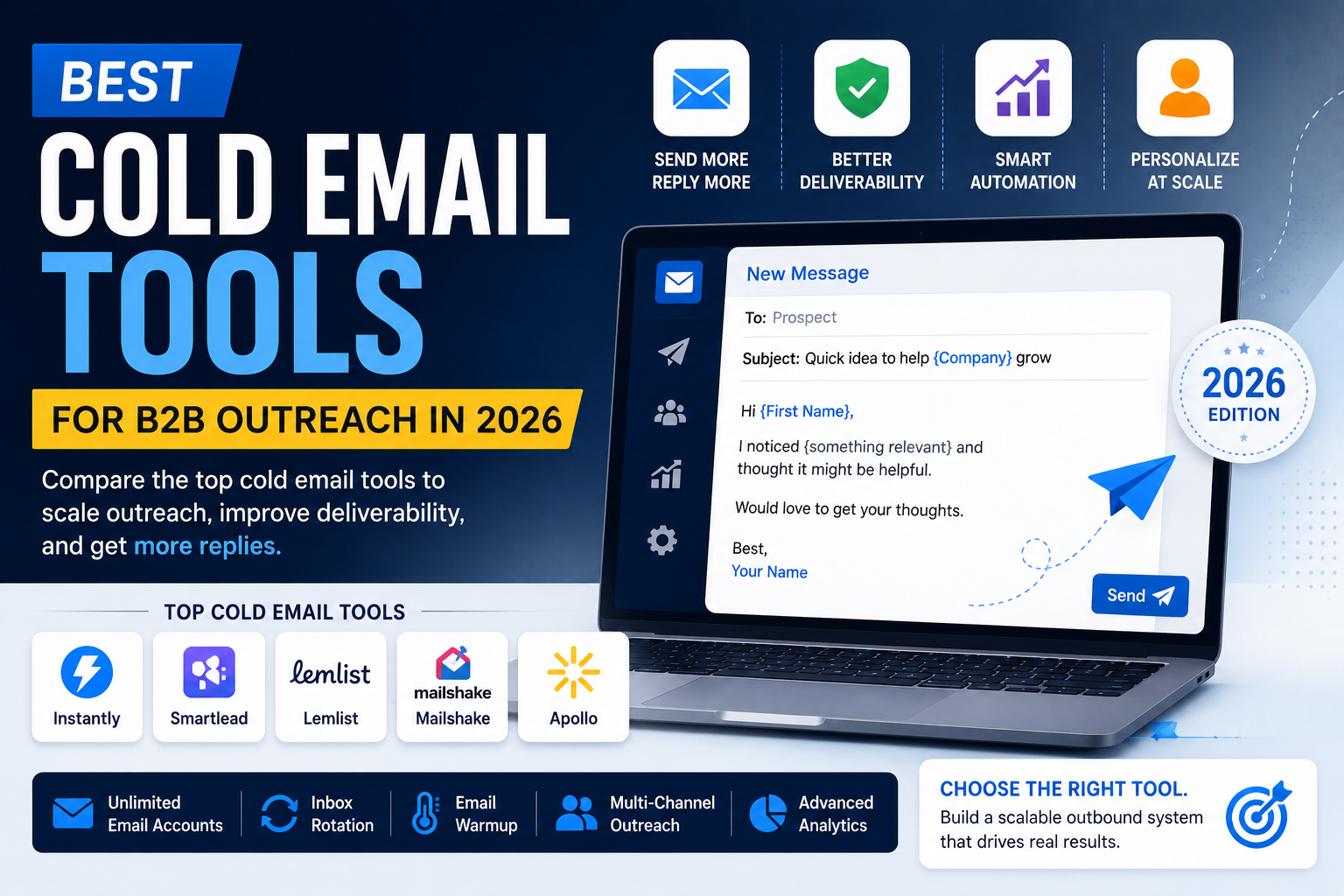
Tools That Support Cold Email Outreach
To run cold email at scale, you need the right tools.
Cold Email Platforms
Tools like Instantly, Smartlead, and Lemlist help you:
• Send emails in sequences
• Automate follow-ups
• Track performance
Data & Prospecting Tools
Platforms like Apollo and Clay help you:
• Build targeted prospect lists
• Enrich contact data
• Improve targeting accuracy
CRM Systems
CRMs help you manage:
• Conversations
• Deals
• Pipeline tracking
This ensures nothing falls through the cracks.
How to Build a Cold Email System
Instead of sending random emails, focus on building a system.
Step 1: Define Your Ideal Customer
Be specific about:
• Industry
• Company size
• Role
Step 2: Build a Quality Prospect List
Focus on accuracy over quantity.
Better targeting always wins.
Step 3: Create a Structured Sequence
Plan your outreach in advance.
Include:
• Initial email
• Multiple follow-ups
Step 4: Track and Improve
Measure performance consistently.
Look at:
• Reply rates
• Positive responses
• Meetings booked
Then optimize accordingly.
Internal Linking Opportunities
To strengthen SEO and user journey, connect this blog with:
• B2B Lead Generation Strategy
• Outbound Lead Generation Guide
• Cold Email Personalization Guide
Want to improve your cold email results?
Download our Cold Email Template Pack and start building high-converting outreach campaigns.
Conclusion
Cold email outreach is not about sending more emails.
It’s about sending the right message to the right person at the right time.
When you combine:
• Clear targeting
• Relevant messaging
• Thoughtful personalization
• Consistent follow-ups
Cold email becomes a reliable way to generate leads and grow your business.
If you want to build a predictable outbound system that actually works:
Book a Free Lead Generation Strategy Call with Maan Digital Solutions.
We’ll help you to generate qualified leads consistently.