Introduction
A successful outbound campaign starts long before you send your first cold email.
It begins with building the right prospect list.
Many businesses spend hours writing personalized emails, setting up follow-up sequences, and choosing outreach tools. But if they're reaching out to the wrong people, even the best campaign is unlikely to deliver results.
A quality prospect list helps you focus on businesses that are more likely to benefit from your services, making your outreach more relevant and improving response rates.
In this guide, you'll learn how to build a B2B prospect list that converts, from defining your Ideal Customer Profile (ICP) to finding decision-makers, organizing your data, and preparing your list for outbound campaigns.
What Is a B2B Prospect List?
A B2B prospect list is a collection of businesses and decision-makers who match your ideal customer profile and are potential buyers of your products or services.
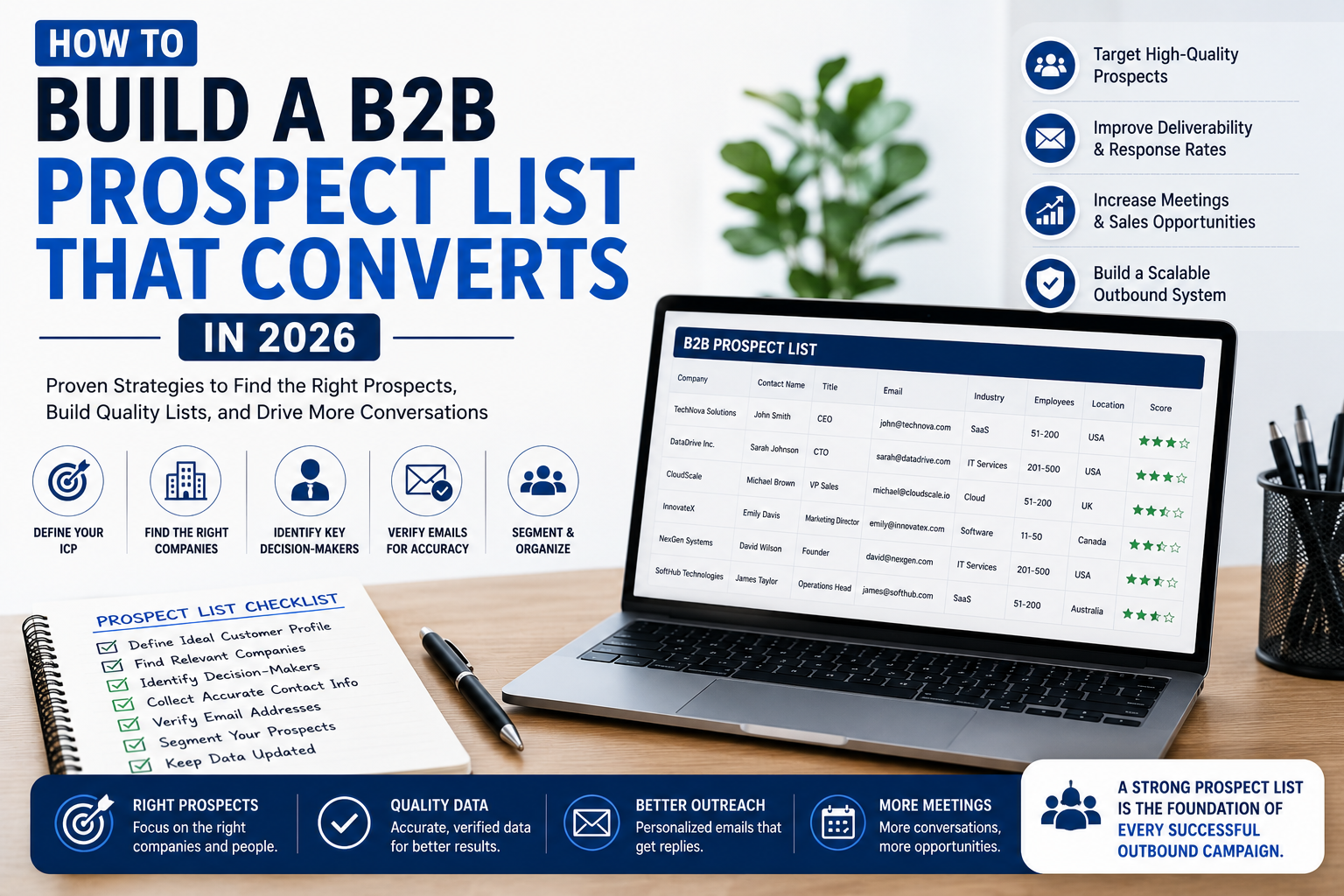
A well-structured prospect list usually includes:
- Company name
- Website
- Industry
- Employee size
- Location
- Decision-maker name
- Job title
- Verified email address
- LinkedIn profile
The objective isn't to collect thousands of contacts.
It's to create a list of businesses that are genuinely relevant to your offer.
Why Prospect List Quality Matters
A poor-quality list affects every stage of your outbound process.
It can lead to:
- lower reply rates
- higher bounce rates
- poor email deliverability
- wasted outreach efforts
- lower conversion rates
A smaller, highly targeted list often performs better than a large list filled with unqualified prospects.
Quality always wins over quantity.
Step 1: Define Your Ideal Customer Profile (ICP)
Before you start prospecting, define exactly who you're trying to reach.
An Ideal Customer Profile helps you focus on businesses that are most likely to become customers.
Consider factors such as:
Industry
For example:
- SaaS
- IT Services
- Healthcare Technology
- Manufacturing
- Financial Services
Company Size
Determine whether you want to target:
- Startups
- Small businesses
- Mid-market companies
- Enterprises
Geographic Location
Choose the countries or regions you want to serve.
Examples:
- United States
- United Kingdom
- Canada
- Australia
Decision-Maker Roles
Identify who typically makes purchasing decisions.
Examples include:
- Founder
- CEO
- Managing Director
- Marketing Director
- VP of Sales
- Head of Business Development
The more clearly you define your ICP, the more effective your prospecting becomes.
Step 2: Find Companies That Match Your ICP
Once you've defined your target audience, start identifying businesses that fit your criteria.
Useful sources include:
- Company websites
- Business directories
- Industry associations
- Startup databases
- Conference exhibitor lists
The goal is to build a list of companies that genuinely match your ICP rather than collecting every business you find.
Step 3: Identify the Right Decision-Makers
Reaching the right person is just as important as finding the right company.
Depending on your service, different roles may be responsible for purchasing decisions.
For example:
Marketing Services
- Marketing Director
- CMO
- Founder
Software Development
- CTO
- VP Engineering
- Founder
Sales Services
- VP Sales
- Sales Director
- Head of Revenue
Understanding who influences buying decisions increases the likelihood of receiving a response.
Step 4: Collect Accurate Contact Information
Once you've identified the right decision-makers, collect the information you need for outreach.
This may include:
- Business email address
- LinkedIn profile
- Company website
- Job title
- Company size
- Industry
Keeping your data organized from the beginning saves time when launching campaigns.
Step 5: Verify Every Email Address
One of the biggest mistakes businesses make is sending emails without verifying their contact list.
Invalid email addresses can lead to:
- high bounce rates
- reduced sender reputation
- lower inbox placement
- poor campaign performance
Before launching any cold email campaign, verify your email list to ensure you're contacting valid recipients.
Our Email Verifier helps identify invalid, risky, and undeliverable email addresses, helping you improve deliverability and protect your sender reputation.
Step 6: Segment Your Prospect List
Not every prospect should receive the same message.
Segmenting your list allows you to personalize outreach based on:
Industry
Different industries have different challenges.
Company Size
Startups and enterprises often require different messaging.
Geography
Regional differences can influence communication style and business priorities.
Job Role
A CEO and a Marketing Director usually care about different outcomes.
Segmentation improves relevance, personalization, and overall campaign performance.
Step 7: Keep Your Data Updated
Businesses change.
People change jobs.
Companies grow.
Email addresses become inactive.
Review your prospect list regularly to remove outdated contacts and maintain data quality.
A clean database improves long-term campaign performance.
Common Prospecting Mistakes
Avoid these common mistakes when building your prospect list.
Targeting Everyone
Trying to reach every business weakens your messaging.
A focused ICP leads to stronger campaigns.
Buying Low-Quality Databases
Large databases often contain outdated or inaccurate information.
Always prioritize data quality.
Ignoring Email Verification
Skipping verification increases bounce rates and damages deliverability.
Failing to Segment Prospects
Sending identical messages to every prospect reduces engagement.
Tailor your outreach whenever possible.
Collecting Too Much Data
Only collect information that supports your outreach strategy.
More data isn't always better.
B2B Prospect List Checklist
Before launching your campaign, confirm that your list includes:
✅ Companies that match your ICP
✅ Correct decision-makers
✅ Verified email addresses
✅ LinkedIn profiles
✅ Company websites
✅ Industry information
✅ Company size
✅ Geographic location
✅ Segmented contact lists
This checklist helps ensure your outreach starts with high-quality data.
Tools That Can Support Prospect List Building
While strategy is more important than software, the right tools can make prospecting more efficient.
Examples include:
Professional Networking
Sales Intelligence
- Apollo
- ZoomInfo
CRM
- HubSpot
- Pipedrive
Email Verification
- Email Verifier by Maan Digital Solutions
Choose tools that fit your workflow and support accurate, well-organized data.
Metrics to Track
As your prospect database grows, monitor:
- Email verification success rate
- Bounce rate
- Reply rate
- Positive response rate
- Meetings booked
- Lead-to-client conversion rate
These metrics help you evaluate the quality of your prospecting process.
Building a quality prospect list is the foundation of every successful outbound campaign.
Take time to define your ideal customer, verify your contact data, and organize your list before sending your first email.
Conclusion
A high-quality B2B prospect list is more than a spreadsheet of names and email addresses.
It's the foundation of your entire outbound strategy.
By defining a clear Ideal Customer Profile, identifying the right decision-makers, verifying contact information, and segmenting your audience, you'll improve every stage of your outreach—from inbox placement to booked sales meetings.
Successful outbound campaigns don't start with sending emails.
They start with building the right list.
If you're looking to build targeted prospect lists and create scalable outbound campaigns, Maan Digital Solutions can help you identify qualified prospects, improve data quality, and develop an outbound strategy that generates meaningful business conversations.