Introduction
You've spent hours building a prospect list, writing personalized emails, and creating a follow-up sequence.
You launch your campaign expecting replies—but instead, you hear nothing.
In many cases, the problem isn't your offer or your email copy.
The problem is that your emails never reached the inbox.
Cold email deliverability has become one of the most important factors in successful outbound lead generation. Even the best-written email won't generate replies if it ends up in the spam folder.
The good news is that deliverability isn't based on luck. It's influenced by several technical and strategic factors that you can control.
In this guide, you'll learn what affects cold email deliverability, why emails land in spam, and the best practices to improve inbox placement in 2026.
What Is Cold Email Deliverability?
Cold email deliverability refers to your ability to successfully deliver emails to your recipient's inbox instead of their spam or junk folder.
Many people confuse delivery with deliverability.
- Delivery means your email was accepted by the recipient's mail server.
- Deliverability means your email actually reached the inbox where it has a chance to be read.
A delivered email isn't always a visible email.
Why Deliverability Matters
You can have:
- excellent copy
- strong personalization
- a perfect follow-up sequence
But none of it matters if your emails never reach your prospects.
Good deliverability helps you:
- improve reply rates
- increase booked meetings
- protect your sender reputation
- maximize your outreach efforts
Poor deliverability often results in lower campaign performance, even when everything else is done correctly.
Why Cold Emails Land in Spam
Several factors influence how email providers evaluate your messages.
Poor Sender Reputation
Email providers monitor your sending behavior.
High bounce rates, spam complaints, and inconsistent sending patterns can reduce your reputation over time.
A poor reputation makes future emails more likely to land in spam.
Missing Email Authentication
Modern email providers expect domains to be properly configured.
Authentication records such as:
- SPF
- DKIM
- DMARC
help verify that your emails are legitimate.
Without these records, mailbox providers may treat your emails as suspicious.
High Bounce Rates
Sending emails to invalid addresses is one of the fastest ways to damage your sender reputation.
High bounce rates indicate poor list quality.
Before every campaign, clean and verify your contact list.
Using a reliable email verification tool helps reduce unnecessary bounces and protects your domain reputation.
Sending Too Many Emails Too Quickly
New domains should never begin by sending hundreds of emails per day.
Mailbox providers expect gradual growth.
Start with lower volumes and increase them steadily as your domain builds trust.
Low Engagement
Mailbox providers monitor recipient behavior.
If people consistently:
- ignore your emails
- delete them immediately
- mark them as spam
future campaigns become more difficult to deliver.
This is why relevant targeting and valuable messaging are just as important as technical setup.
How to Improve Cold Email Deliverability
Improving deliverability requires both technical preparation and good outreach practices.
Warm Up Your Email Account
If you're using a new domain or email account, don't begin large outreach campaigns immediately.
Start slowly.
Increase your daily sending volume over several weeks while maintaining consistent activity.
This helps build sender trust.
Authenticate Your Domain
Before launching any campaign, configure:
- SPF
- DKIM
- DMARC
These records confirm that your emails are authorized by your domain.
Authentication significantly improves trust with mailbox providers.
Verify Every Email Address
One of the simplest ways to improve deliverability is by sending emails only to valid addresses.
Invalid or inactive email addresses increase bounce rates and damage your reputation.
Before launching a campaign, verify your prospect list.
Our Email Verifier helps businesses identify invalid, risky, and undeliverable email addresses, helping reduce bounce rates and improve inbox placement.
Keep Your Sending Volume Consistent
Large spikes in sending activity can trigger spam filters.
Instead of sending 500 emails one day and none the next, maintain a consistent daily volume.
Predictable sending patterns are generally viewed more favorably.
Write Natural Email Copy
Spam filters have become much more sophisticated.
Instead of focusing on individual words, they evaluate the overall quality and engagement of your emails.
Good cold emails should:
- sound conversational
- provide value
- avoid excessive promotional language
- encourage genuine replies
Remember, you're writing to start a conversation—not deliver a sales pitch.
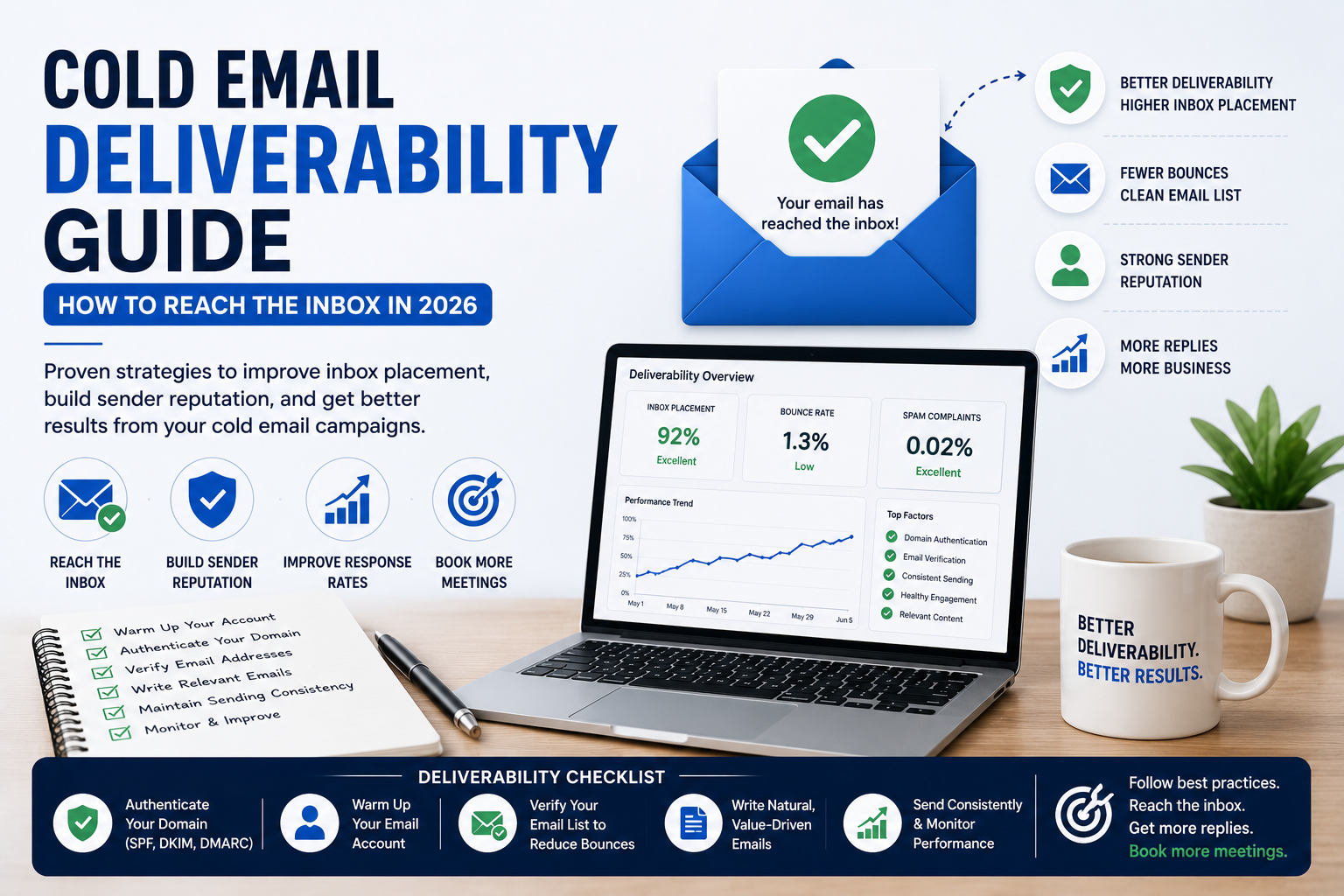
Cold Email Deliverability Checklist
Before launching your next campaign, check the following:
✅ Domain authentication configured
✅ Email account warmed up
✅ Prospect list verified
✅ Personalization added
✅ Consistent sending volume
✅ Relevant target audience
✅ Follow-up sequence prepared
Completing this checklist significantly improves your chances of reaching the inbox.
Common Deliverability Mistakes
Even experienced teams make mistakes that hurt inbox placement.
Buying Low-Quality Email Lists
Cheap email databases often contain outdated or invalid contacts.
Always prioritize data quality over quantity.
Ignoring Bounce Rates
Bounce rates provide valuable feedback about list quality.
High bounce rates should never be ignored.
Sending Generic Outreach
Poor engagement signals reduce future deliverability.
Relevant messaging improves both replies and inbox placement.
Using One Domain for Everything
Many outbound teams separate their marketing emails from outbound sales domains.
This reduces risk and helps protect the primary business domain.
Tools That Help Improve Deliverability
A reliable outbound workflow often includes:
Outreach Platform
- Instantly
- Smartlead
- Lemlist
Email Verification
- Email Verifier by Maan Digital Solutions
CRM
- HubSpot
- Pipedrive
Prospecting
- Apollo
- LinkedIn Sales Navigator
The right tools support your strategy, but they don't replace good targeting and quality outreach.
Metrics to Monitor
Regularly review:
- bounce rate
- reply rate
- spam complaint rate
- open rate (where available)
- meetings booked
Tracking these metrics helps identify problems before they impact future campaigns.
Internal Linking Strategy
This article should link to:
- Cold Email Outreach: Complete Guide to Generate B2B Leads in 2026
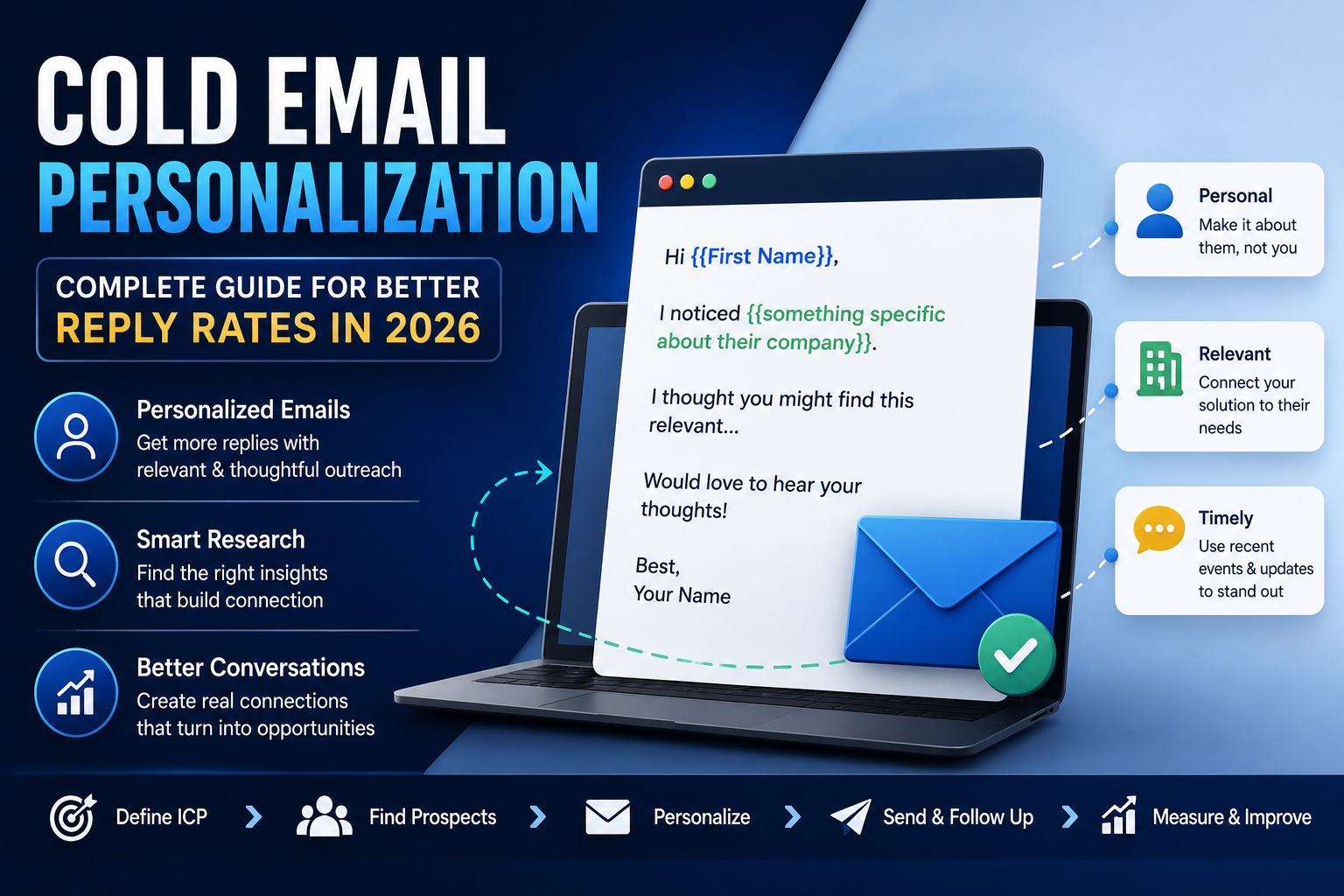
- Cold Email Personalization: Complete Guide for Better Reply Rates in 2026
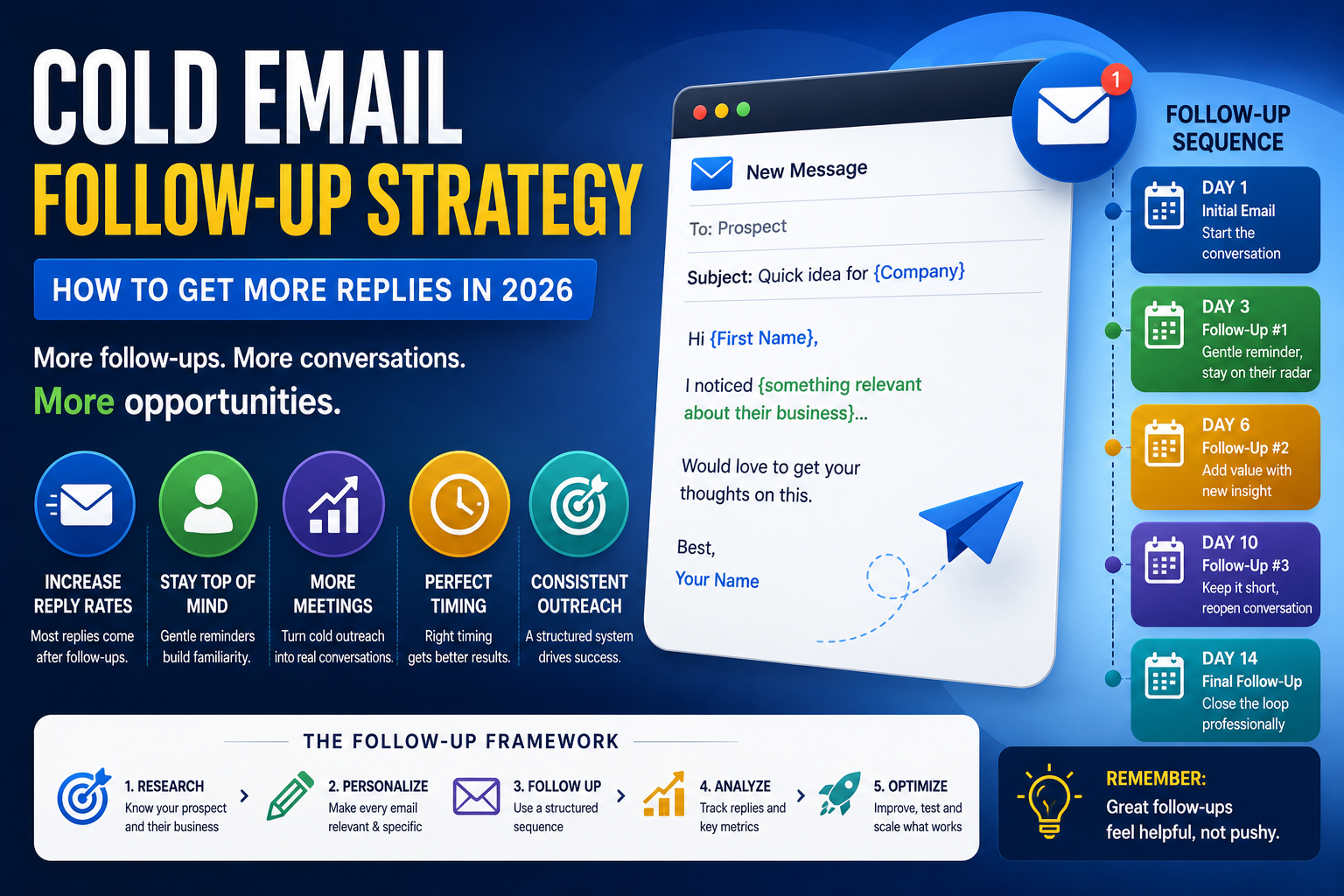
- Cold Email Follow-Up Strategy: How to Get More Replies in 2026
- Best Cold Email Tools for B2B Outreach in 2026
- How to Generate Sales Meetings with Cold Email: Complete Guide for 2026
Want to improve your inbox placement before launching your next campaign?
Verify your email lists first and give every outreach campaign the best chance of reaching the inbox.
Conclusion
Cold email deliverability is one of the foundations of successful outbound lead generation.
You can invest time creating personalized campaigns and thoughtful follow-ups, but none of that matters if your emails never reach your prospects.
By focusing on proper domain authentication, clean contact data, consistent sending habits, and relevant messaging, you'll improve both your inbox placement and your campaign performance.
Deliverability isn't a one-time setup—it's an ongoing process that supports every successful cold email campaign.
If you're looking to improve your cold email performance, Maan Digital Solutions can help you build a scalable outbound system that combines quality prospecting, verified email lists, and proven outreach strategies to generate more qualified conversations.